What Is an SEO Report and What Should It Explain
An SEO report explains how a website’s search visibility and useful visitor outcomes changed, what work was completed, and what should happen next. It combines selected evidence with interpretation for a specific reader.
A report can be a document, presentation, email, or a dashboard with commentary. Its usefulness depends on the questions it answers, not the number of charts it contains.
Begin with the business objective
A local service business may want suitable inquiries. A store may want useful shopping activity and profitable orders. A software company may care about relevant trials or demonstrations.
State the objective so the reader knows why the metrics were selected. A report built around traffic alone may miss whether the audience matches the business.
Define who will read it. A business owner needs a different level of detail from a technical specialist implementing fixes.
Include results and explanation
| Report section | Main question |
|---|---|
| Objective and period | What are we trying to achieve and when |
| Important results | What changed in relevant measures |
| Interpretation | What does the evidence suggest |
| Completed work | What was implemented or delivered |
| Issues and limits | What remains uncertain or blocked |
| Next actions | What should happen and who owns it |
Keep supporting technical detail in an appendix or linked internal record. The main report should be understandable without a specialist explaining every abbreviation.
Explain common metrics
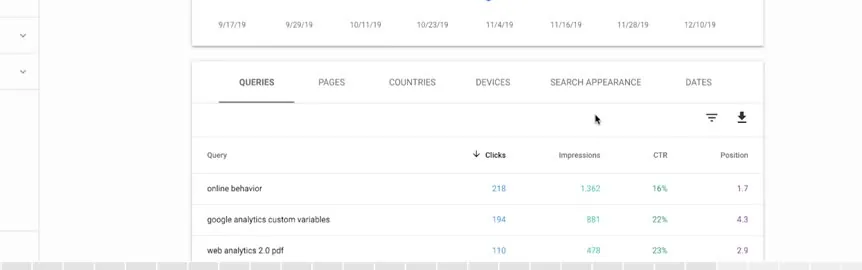
Impressions describe appearances in search under the source’s definitions. Clicks record search-result interactions. Analytics sessions and users describe website activity under different measurement rules.
Rankings describe positions for queries and contexts. Search Console average position aggregates observed impressions, while a rank tracker can sample selected searches. Neither number is a universal fixed position for every customer.
Leads, bookings, orders, and qualified inquiries need business definitions. A form submission may be spam or an existing customer, so it is not automatically a new opportunity.
Use comparisons that make sense
Show the period and comparison clearly. Month-over-month changes can be useful, but seasonality or differing month lengths may affect interpretation. Year-over-year comparisons can add context when definitions remain consistent.
Record tracking changes, site migrations, promotions, closures, and other events that affect the data. A chart without those notes can tell the wrong story.
Use both absolute and relative changes. A 100 percent increase from one to two inquiries is different from an increase from 100 to 200, even though the percentage is the same.
Separate delivery from outcomes
“Published three articles” is a delivery fact. “Qualified inquiries increased” is a business observation. Neither proves that those articles caused the increase.
Record whether technical recommendations were implemented, submitted for approval, or merely identified. A completed audit is not the same as completed corrections.
This distinction helps the reader understand progress and dependencies. A blocked development task may explain why an intended improvement has not yet been tested.
Add useful commentary
A strong paragraph identifies the change, relevant context, evidence limits, and recommended action. Avoid restating the chart in a longer sentence.
For a fictional example, a service page gains search clicks but suitable inquiries remain flat. The report might recommend checking call routing and form completion before increasing content production.
That is a hypothesis and next test, not proof that the contact process caused the result. Make the distinction clear.
Build a simple first report
Start with first-party search data, website analytics where available, a business outcome record, and an implementation log. Use the same date range and document definitions.
Choose a small set of measures tied to the objective. Add a concise summary, completed work, issues, and next actions. A well-explained two-page document can be more useful than a large automated export.
Check data before distribution. Missing connections, wrong currencies, or mismatched date ranges can create avoidable confusion.
Recognize a weak report
Be cautious when a report shows only positive charts, unexplained tool scores, or rankings for irrelevant terms. Ask what the numbers measure and why they matter.
A polished report can still omit unfavorable outcomes or unresolved issues. Useful reporting should make the next decision clearer, including when the result is disappointing.
Also avoid false certainty. A provider should not claim that every change was caused by its work without an appropriate basis.
Choose a useful cadence
Monthly reporting is common, but the right schedule depends on the campaign and reader. Operational alerts may need faster attention than strategic reviews.
A reporting date should not force conclusions from an inadequate sample. State when more data or implementation time is needed.
Use each review to decide what to continue, change, investigate, or stop. The report is part of the management process rather than a ceremonial attachment.
For the underlying implementation or measurement guidance, consult the official reference and check current requirements before making changes.
Frequently Asked Questions
Is an SEO report the same as an audit
No. An audit diagnoses a site or local presence at a point in time. A report usually explains performance, work, issues, and next actions over a period.
Is a dashboard an SEO report
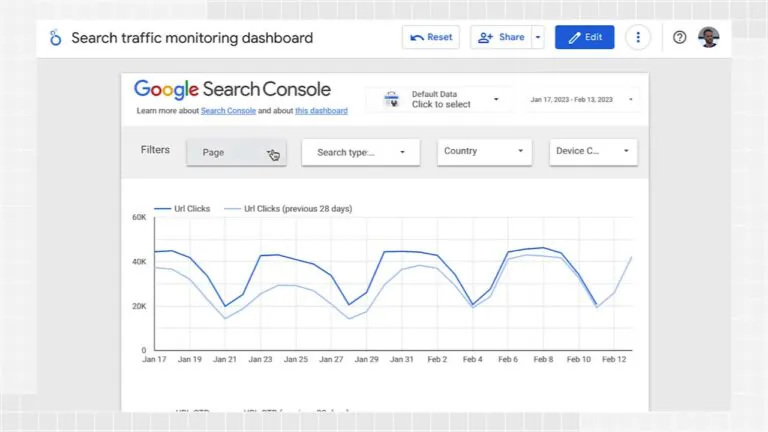
It can support one, but a dashboard without interpretation may not answer what the results mean or what should happen next.
What should a beginner include
The objective, period, a few relevant metrics, completed work, limitations, and clear next actions. Define unfamiliar terms.
Should a report include bad results
Yes. Explain them accurately, investigate possible causes, and recommend a justified response rather than hiding the decline.
How long should the report be
Long enough to support the reader’s decisions. Keep the summary concise and preserve detailed evidence separately.