Ecommerce SEO Strategy From Store Structure to Sales

An ecommerce SEO strategy connects product demand with useful category and product pages, reliable technical access, accurate product information, and a clear shopping experience. Begin with the catalog and customer task before commissioning a large blog calendar.
Prioritize work according to demand, product availability, commercial value, and implementation capacity. More indexed URLs or traffic do not automatically mean a healthier store.
Map the catalog to search intent
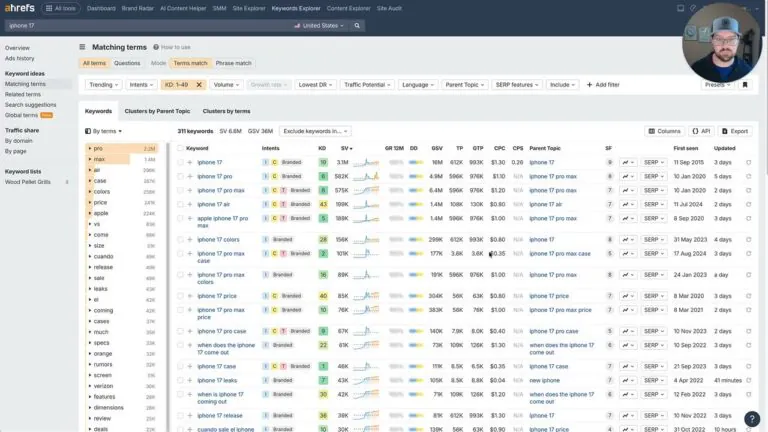
Identify how customers describe categories, product types, attributes, use cases, and specific products. Inspect current results to understand which page formats serve each query.
A category page can help people compare a group of products. A product page answers questions about a particular item. A guide can explain selection or use when that helps the shopping decision.
Assign intents to existing or proposed URLs. Avoid several pages competing to perform the same task without useful differences.
Improve category pages
A useful category page offers relevant products, understandable organization, filters that serve shoppers, and enough explanation to support the decision. Do not add a long generic essay simply to increase word count.
Use clear names and a discoverable navigation hierarchy. Important categories and products should be reachable through ordinary links rather than only through an internal search box.
Where useful, explain selection criteria, important differences, and practical limitations. Keep the content accurate for the products actually available.
Make product pages complete
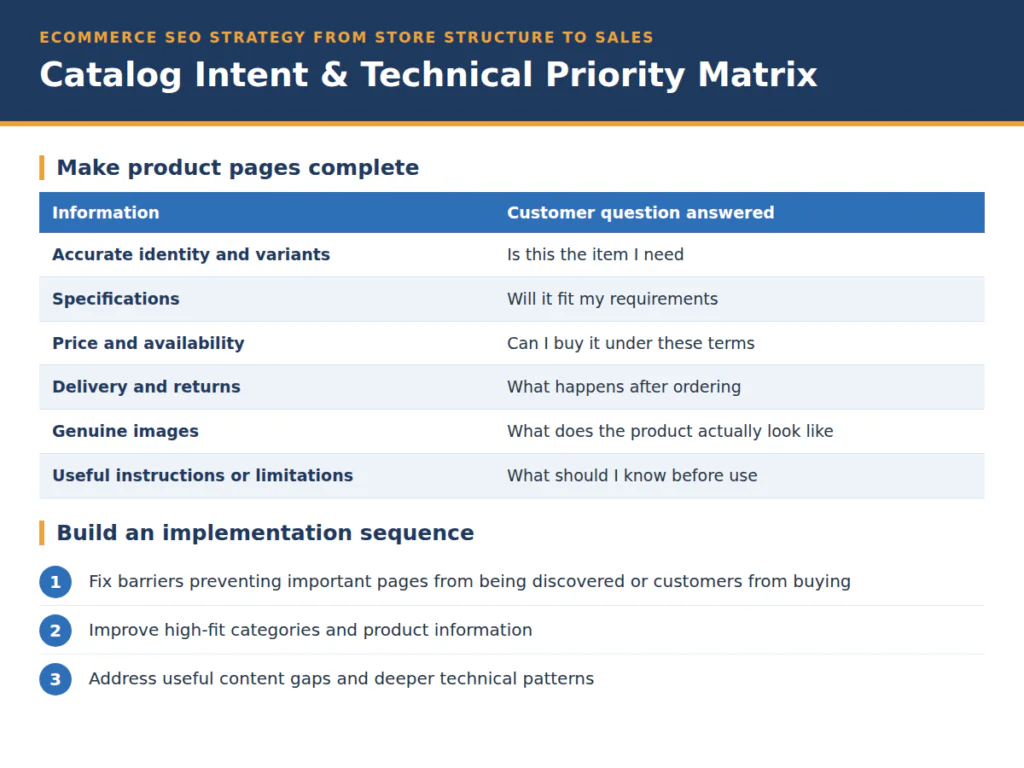
| Information | Customer question answered |
|---|---|
| Accurate identity and variants | Is this the item I need |
| Specifications | Will it fit my requirements |
| Price and availability | Can I buy it under these terms |
| Delivery and returns | What happens after ordering |
| Genuine images | What does the product actually look like |
| Useful instructions or limitations | What should I know before use |
Avoid copying supplier descriptions without adding useful store-specific information where appropriate. Do not invent reviews, test results, or product benefits.
Keep structured data consistent with visible product information. Markup does not excuse inaccurate prices or unavailable products.
Control duplicate and filtered URLs
Faceted navigation can generate many combinations of sorting and filtering URLs. Decide which combinations deserve discoverable search pages and which mainly support shopping interactions.
Canonical settings, crawling controls, and indexing directives serve different purposes. Have a technical specialist review the implementation rather than applying one rule indiscriminately.
Test representative cases: category pages, product variants, pagination, filters, out-of-stock items, and discontinued products. A template change can affect a large part of the catalog.
Handle stock and product lifecycle
A temporarily unavailable item may still have useful information and expected future stock. A permanently discontinued product needs a different decision based on relevance, replacements, user value, and the site’s structure.
Avoid redirecting every unavailable product to the homepage. That may disappoint users looking for a specific item. Choose the response according to the actual situation and test it.
Record who owns product updates. SEO work depends on catalog accuracy, merchandising, and operations as well as marketing.
Use content to support shopping
Create guides when they help customers choose, compare, maintain, or use the products. Link them to relevant categories and items where the connection is useful.
For example, a store selling camera accessories might explain compatibility and selection criteria using actual product specifications. It should not claim firsthand tests that did not occur.
Keep the article’s task distinct from the category’s task. A guide should not compete with a category page by repeating its product list without adding explanation.
Review performance and mobile usability
Test navigation, filters, variant selection, cart behavior, and checkout on a phone. A visitor should be able to understand the product and complete a purchase without avoidable friction.
Optimize images responsibly, preserving useful detail and accurate representation. Use real product imagery or clearly identified illustrations; generated images should not misrepresent the item sold.
Check important redirects and tracking after theme changes or migrations. A visual redesign can alter technical and measurement behavior.
Connect search with commercial outcomes
Measure relevant landing-page visits, shopping actions, orders, revenue, and contribution where available. Keep definitions and attribution consistent.
Revenue alone can hide low-margin sales, returns, or stock constraints. Compare category priorities with the business’s actual economics and capacity.
Review seasonality, promotions, product changes, and measurement updates before attributing every result to SEO. A traffic decline may reflect unavailable stock or demand changes as well as visibility problems.
Build an implementation sequence
First, fix barriers preventing important pages from being discovered or customers from buying. Next, improve high-fit categories and product information. Then address useful content gaps and deeper technical patterns.
Use a priority register with affected templates, evidence, impact, effort, dependencies, and owner. Verify changes on the live store and review a representative sample after deployment.
Expand only when the store can maintain product facts, content, and technical behavior. A growing catalog creates an ongoing quality obligation.
For the underlying implementation or measurement guidance, consult the official reference and check current requirements before making changes.
Frequently Asked Questions
Should ecommerce SEO start with blog posts
Usually the catalog, category pages, product information, technical access, and shopping path need review first. Guides should support genuine customer questions.
Should every filter page be indexed
No universal rule applies. Evaluate distinct demand, useful content, duplication, and technical behavior before deciding which combinations deserve search pages.
What should happen to out of stock products
Distinguish temporary unavailability from permanent discontinuation and choose a useful response. Avoid blanket redirects without considering the shopper’s task.
Does product schema guarantee rich results
No. Accurate markup supports eligibility and interpretation but does not guarantee a particular display or ranking.
What is the main success metric
Use useful shopping and business outcomes alongside discovery metrics. Revenue, margin, returns, and customer relevance can all affect the decision.