How to Find the Best SEO Keywords for a Page Plan
The best SEO keywords are the queries that match your audience, your offer or expertise, and a page you can make genuinely useful. Find them by combining customer language, first-party data, search-result review, and a realistic assessment of what you can publish or improve.
Do not begin by sorting an export from largest volume to smallest. Start with the problems you can solve and the people you want to reach.
Build seed topics from the business
List products, services, use cases, problems, objections, and common customer questions. Use the language customers use in calls, messages, support requests, and sales conversations.
For a photography business, seeds might include wedding photography, venue planning, portrait sessions, and location-specific service needs. Each seed can lead to different page types.
Keep irrelevant opportunities out of the list even if they appear popular. A keyword is useful only when the resulting audience and task fit the website.
Use existing search evidence
For a site you control, inspect Search Console queries and pages. Look for relevant impressions, incomplete coverage, confusing page targeting, and questions the site already partially answers.
Remember that first-party data describes the site’s observed search activity, not every possible query in the market. A new site may need more external research.
Talk to customers and subject experts alongside the data. Tools can estimate demand; they do not fully explain why a customer cares or what prevents a purchase.
Expand with search and research tools
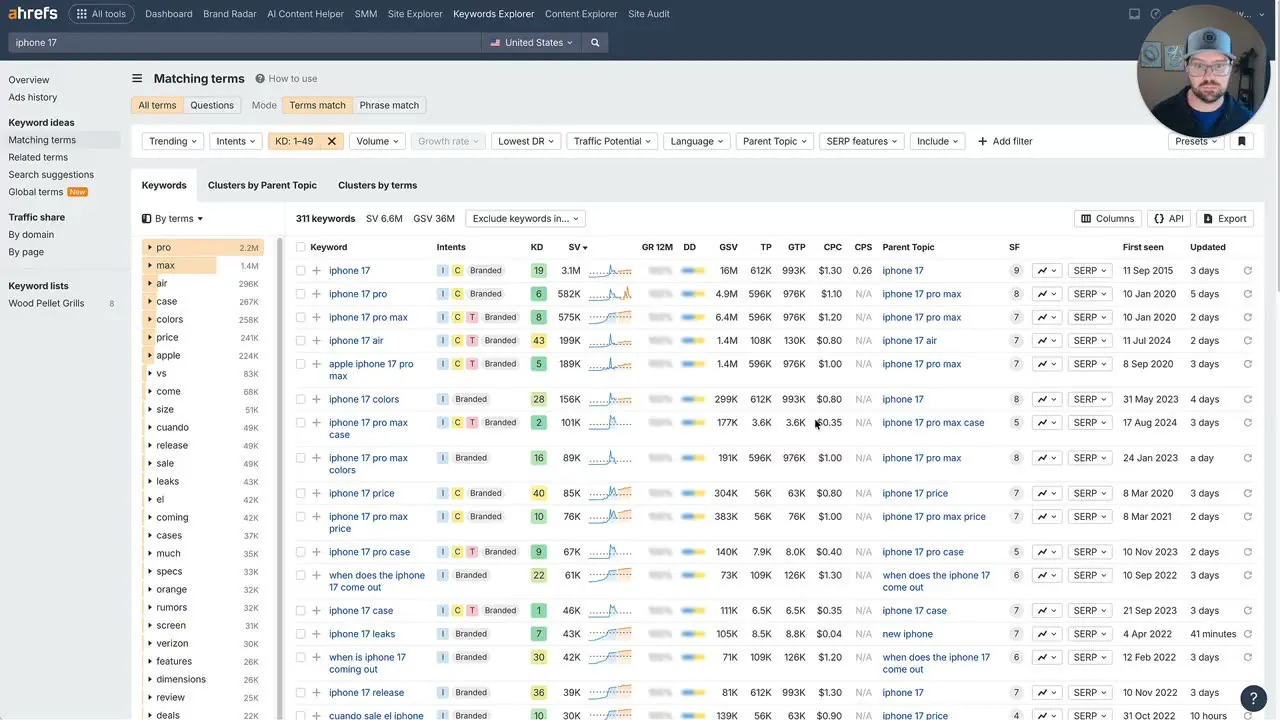
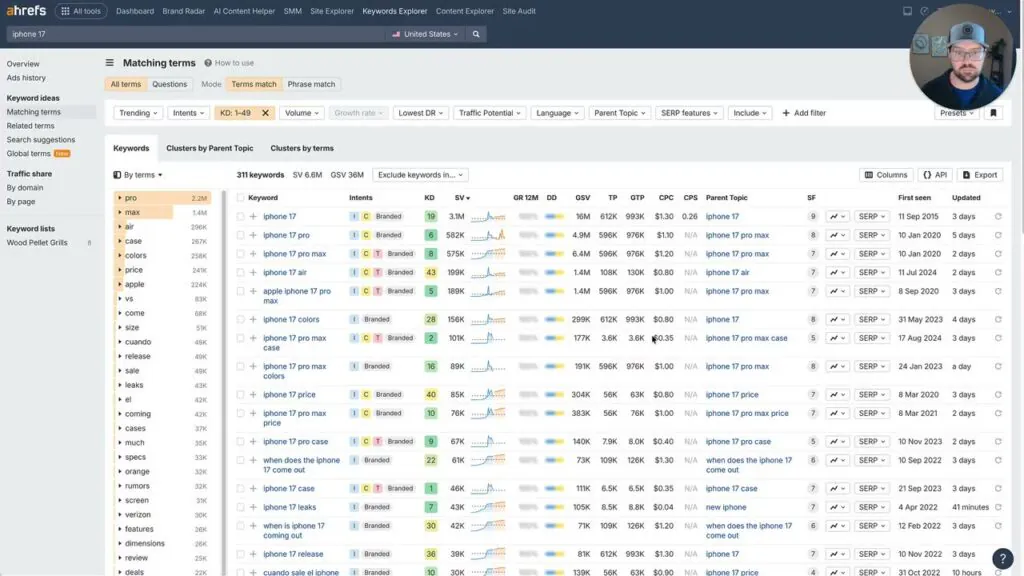
Use autocomplete, related searches, competitor pages, keyword tools, and trend data to generate candidates. Record the source and market settings.
Search volumes, difficulty scores, and traffic estimates are vendor models. Treat them as planning inputs rather than exact counts or Google-issued ratings.
Review seasonality and geographic differences. A yearly average may hide a narrow demand period, and a global number may be irrelevant to a US-only offer.
Inspect the result page
Look at the dominant formats: product pages, services, tutorials, definitions, comparisons, videos, or local results. Identify whether the query has mixed intent.
Read representative competing pages. Ask what the reader expects and whether you can add useful evidence, a better example, a tool, or clearer decisions.
Do not infer a complete US ranking list from a generic web search. Record query, country, location where relevant, device, date, and result type when performing a formal SERP review.
Score candidates with transparent criteria
| Criterion | Question |
|---|---|
| Audience fit | Would the right person search this |
| Business relevance | Does the task connect to your real offer or purpose |
| Intent clarity | Can you identify the page format required |
| Evidence capacity | Can you explain it accurately and add useful detail |
| Competition | What would a credible competing page require |
| Demand | Is the likely opportunity sufficient for the effort |
| Maintenance | Can changing facts be kept current |
You can use a simple score to organize the discussion, but document the reasoning. Do not let a numerical average override a critical audience or evidence mismatch.
Group keywords into page topics
Several queries can belong to the same page when they share intent. “SEO title meaning” and “what is an SEO title” generally call for a similar explanation.
A definition and a software comparison may need separate pages even if they contain the same subject words. The reader’s task determines the split.
Create a page map with the cluster, primary wording, proposed URL, page type, audience, supporting questions, existing page, and next action. Update an existing page when that is the better solution.
Work through an example
Imagine a small agency considering “SEO,” “local SEO audit checklist,” and “SEO report template.” The first is broad and may be difficult to serve well. The other two describe practical tasks the agency can explain with usable assets.
The agency chooses an audit guide with an evidence register and a report guide with a clearly labeled sample. It keeps them separate because the tasks differ, then links them where the workflow connects.
This is an illustrative prioritization. It does not claim that either phrase has a particular volume or guarantees an easier ranking.
Plan questions and semantic coverage
List the decisions, entities, and follow-up questions required to explain the topic. For an audit guide, that may include profiles, service pages, public records, technical access, measurement, and prioritization.
Use the terms naturally in the explanation. An entity list is a research aid, not a paragraph to paste into the article.
Visible FAQs can answer genuine remaining questions. Avoid repeating the main body under slightly different headings simply to add more question phrases.
Review after publication
Check whether the intended page attracts relevant queries and whether readers complete useful actions. Diagnose intent, content, technical access, and competition before changing the target.
A page can gain impressions while its average position changes because it appears for more varied queries. Review query groups and page context rather than reacting to one aggregate metric.
Update the map as you learn. Keyword research is a maintained set of decisions, not a one-time spreadsheet export.
For the underlying implementation or measurement guidance, consult the official reference and check current requirements before making changes.
Frequently Asked Questions
Should I target the highest volume keyword
Only when the audience, intent, and page requirements fit. Volume without relevance can create traffic that does not serve the website’s purpose.
Are low difficulty keywords always easy
No. Difficulty scores model particular factors and vary by tool. Inspect the actual results and the work required.
Does each keyword need its own article
No. Group queries sharing the same task, and separate pages when the reader needs a different format or decision process.
Can I do keyword research for free
Yes. Customer language, Search Console, manual result review, and official limited tools can support a useful initial plan.
How many supporting keywords should I use
Use the terms needed for an accurate explanation. There is no universal count that makes a page complete or guarantees visibility.