Accurate SEO Rank Tracking and Comparing Results
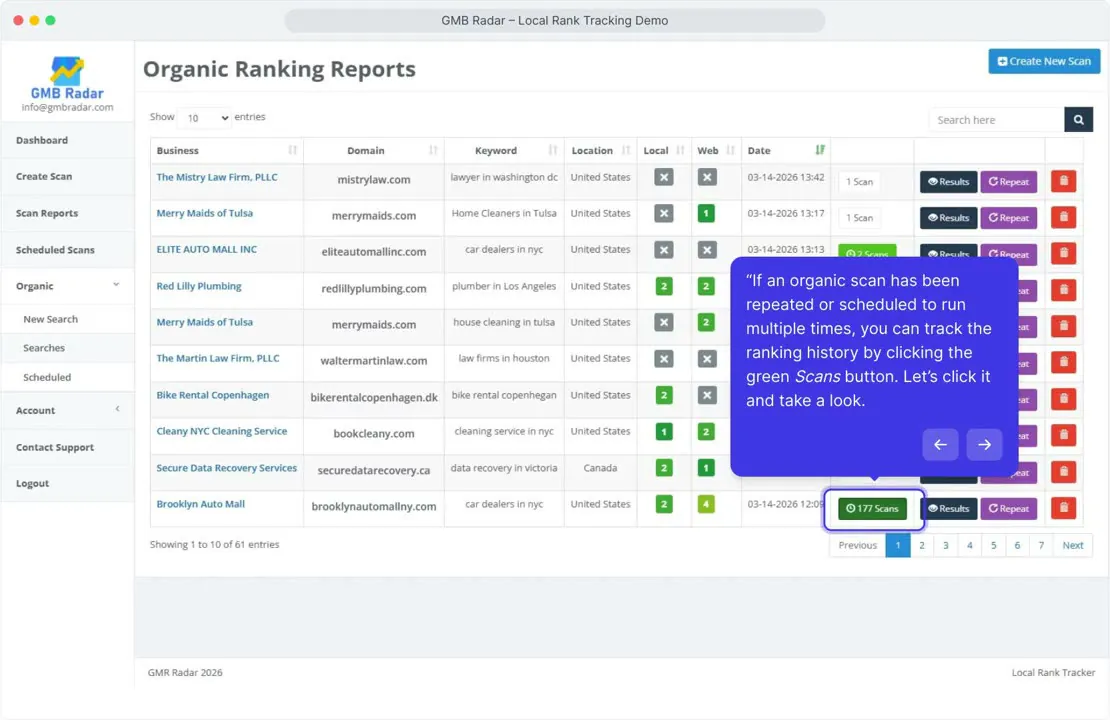
Accurate SEO rank tracking means measuring a clearly defined search result under a consistent configuration. Query, location, device, language, time, and result type all matter. Two tools can disagree because they measured different contexts rather than because one is simply wrong.
Define what you need to know before choosing a tracker. A national content team, a local contractor, and an ecommerce business may need different samples and reporting.
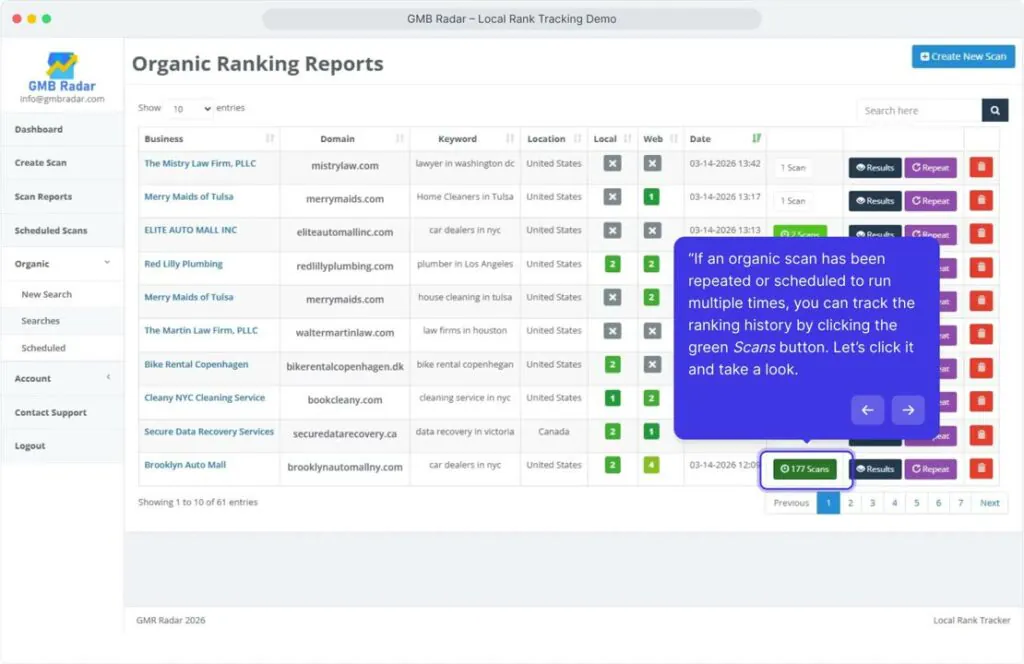
Specify the measurement
Record the query exactly, the target market, location where relevant, device, language, search engine, update cadence, and whether you count ordinary organic results, local results, or other features.
Also define the ranking URL and how result features are handled. A search page may contain advertisements, Maps, videos, shopping elements, or AI answers alongside ordinary links.
Without those definitions, “position three” can mean different things in different reports. A number is useful only when the reader understands what was counted.
Understand Search Console average position
Search Console reports observed search performance for the site, including an average position calculated across impressions. It is not a fixed daily rank for one simulated search context.
A dedicated tracker typically checks a chosen query configuration on a schedule. That answers a different question from the site’s observed mix of impressions.
Use both appropriately. Search Console can show actual query and page patterns, while a tracker can provide a controlled sample of selected terms. Neither should be silently substituted for the other.
Diagnose disagreements systematically
| Possible cause | What to compare |
|---|---|
| Geography | Country, city, postcode, or coordinate settings |
| Device | Mobile versus desktop |
| Timing | Collection date, time, and update cadence |
| Query | Exact wording and language |
| Result counting | Organic links, local results, and feature rules |
| URL handling | Canonical, redirected, or alternate ranking page |
| Sampling | Scheduled test versus actual user impressions |
Change one variable at a time when investigating. Otherwise, you cannot tell which difference explains the result.
Do not validate with one manual search
A manual search can help inspect a result page, but it is not a neutral ground truth for every user. Incognito browsing does not remove location, device, time, or result-layout differences.
Record the context of a manual observation and compare it with the tracker’s configuration. Repeat a controlled sample rather than drawing a conclusion from one screenshot.
If a provider claims superior accuracy, ask how it defines and tests that claim. “Real-time” or “hyperlocal” marketing language needs an operational explanation.
Design a useful keyword set
Choose queries tied to important pages and business needs. Separate branded, nonbranded, local, informational, and commercial groups where useful.
Avoid tracking a large list merely because the subscription permits it. Irrelevant queries can distort visibility summaries and increase cost.
Keep the set stable enough for comparison. If terms are added or removed, note the change. An aggregate visibility increase can result from changing the tracked set rather than better performance.
Evaluate local tracking
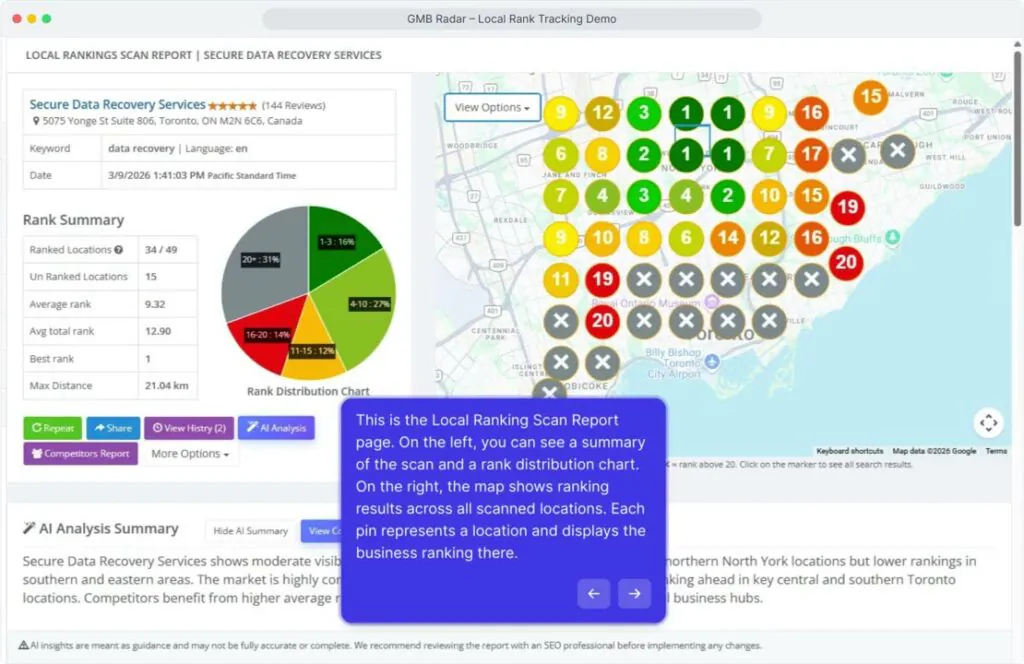
Local results vary across an area. A grid can show a sample of different locations, but its spacing, boundaries, categories, and query choices affect interpretation.
Match the sample to the business’s real service market. Do not choose only favorable points or imply that every person in the area sees the same result.
Keep ranking observations separate from profile eligibility, actual customer actions, and revenue. A better sampled position may not produce useful demand if the offer or contact process is weak.
Compare tools with a controlled pilot
Test the same queries, market, device, and schedule across candidates. Review the actual result evidence, historical access, exports, alerting, and how missing observations are displayed.
Products such as dedicated rank trackers and broad suites are candidates to investigate, but the current plan determines locations, frequency, keyword limits, and API access. Verify those details directly.
Include reporting and review effort in the cost. A cheap tool can become expensive if every discrepancy requires manual reconstruction.
Report movements with context
A useful report identifies the affected query group and pages, the measurement method, the observed change, and what action is justified.
Avoid treating small day-to-day movements as a reason to rewrite pages immediately. Review the pattern, data quality, demand, and other site changes first.
If a different URL begins ranking, inspect whether the page map and internal links are clear. The response may be consolidation or intent clarification rather than more keywords.
Keep rankings connected to business value
Track relevant visits and useful actions alongside visibility. A term can improve while attracting the wrong audience, or remain stable while demand changes.
For a hypothetical service business, better rankings for a broad informational query may produce no suitable calls. A smaller local service query could be commercially more useful. The example illustrates why query relevance belongs in the report.
Use rank tracking to investigate discovery and competition. It should inform decisions rather than function as a substitute for customer outcomes.
Google explains the underlying measurement in its metric definitions. Use those definitions when comparing observed averages with a tracker sample.
Frequently Asked Questions
Which rank tracker is the most accurate
Compare tools against a defined configuration and test method. There is no useful universal answer without specifying market, device, cadence, and result counting.
Why does Search Console disagree with my tracker
They often measure different populations and contexts. Search Console average position aggregates observed impressions, while a tracker samples chosen searches.
Is incognito search a reliable benchmark
It is a limited observation. Geography, device, timing, and result layout can still differ from the tracker.
Should I track every keyword daily
Only when that cadence serves a real decision. Choose useful queries and a schedule appropriate to the campaign and budget.
Does a higher ranking guarantee more leads
No. Demand, relevance, result presentation, landing-page quality, and the inquiry process affect the outcome.